
Table of Contents
Essential Bookkeeping for Small Businesses
With employees on board, essential Bookkeeping becomes critical for small businesses. Accurate records ensure compliance with payroll obligations, as the U.S. Small Business Administration emphasizes proper record-keeping, wage tracking, and adherence to federal requirements in their authoritative guidelines on hiring and managing staff.
Key small business bookkeeping tasks include:
- Record all income and expenses daily.
- Track employee hours and wages accurately.
- Reconcile bank statements weekly.
Payroll bookkeeping requires withholding taxes, Social Security, workers’ compensation, and benefits, maintaining records for at least four years per SBA recommendations.
Overwhelmed owners gain efficiency with outsourced bookkeeping. We become an extension of your team through our bookkeeping services. Master these basics before diving into advanced financial strategies or professional support.
1. Clarify Bookkeeper Roles
Many small business owners face hiring confusion. It is time to clarify bookeeping roles. A bookkeeper handles daily Bookkeeping transactions, reconciliations–matching bank records to books–and basic reporting, not advanced tax or audit work.
Here are five key responsibilities:
- Record all transactions in ledgers, ensuring QuickBooks updates weekly.
- Reconcile bank statements monthly to catch discrepancies early.
- Generate invoices and track payments for steady cash flow.
- Prepare basic financial statements like profit and loss reports.
- Maintain payroll records for small teams, tracking hours and wages.
Bookkeepers focus on data entry and organization; accountants analyze data and advise on compliance.
Hire when monthly transactions exceed 100 or revenue reaches $100K annually. We suggest outsourced bookkeeping versus in-house for flexibility, per U.S. Small Business Administration (SBA) authoritative advice on job descriptions and interviews. Address small business bookkeeping needs clearly.
Draft a job description clarifying these roles before posting. Once clear, evaluate hiring options in Section 2.
2. Understand Bookkeeping Costs
After identifying your bookkeeping needs from Section 1, understanding costs helps budget effectively. For small business bookkeeping, monthly fees typically range from $500-$2,500, influenced by transaction volume and complexity. We at My HR Professionals see these variations daily as businesses seek efficient solutions.
Key aspects include:
- Pricing models: Hourly rates of $30-$60/hour, fixed monthly fees, or per-transaction options for flexibility.
- Influencing factors: Transaction count (under 100: low tier; 500+: high), QuickBooks integration (adds ~20%), and industry (retail simpler than construction).
- In-house vs. outsourced bookkeeping: In-house costs $40k-$60k/year plus software; outsourced bookkeeping saves 30-50% on overhead.
- Related services like payroll services small business add $100-$300/month.
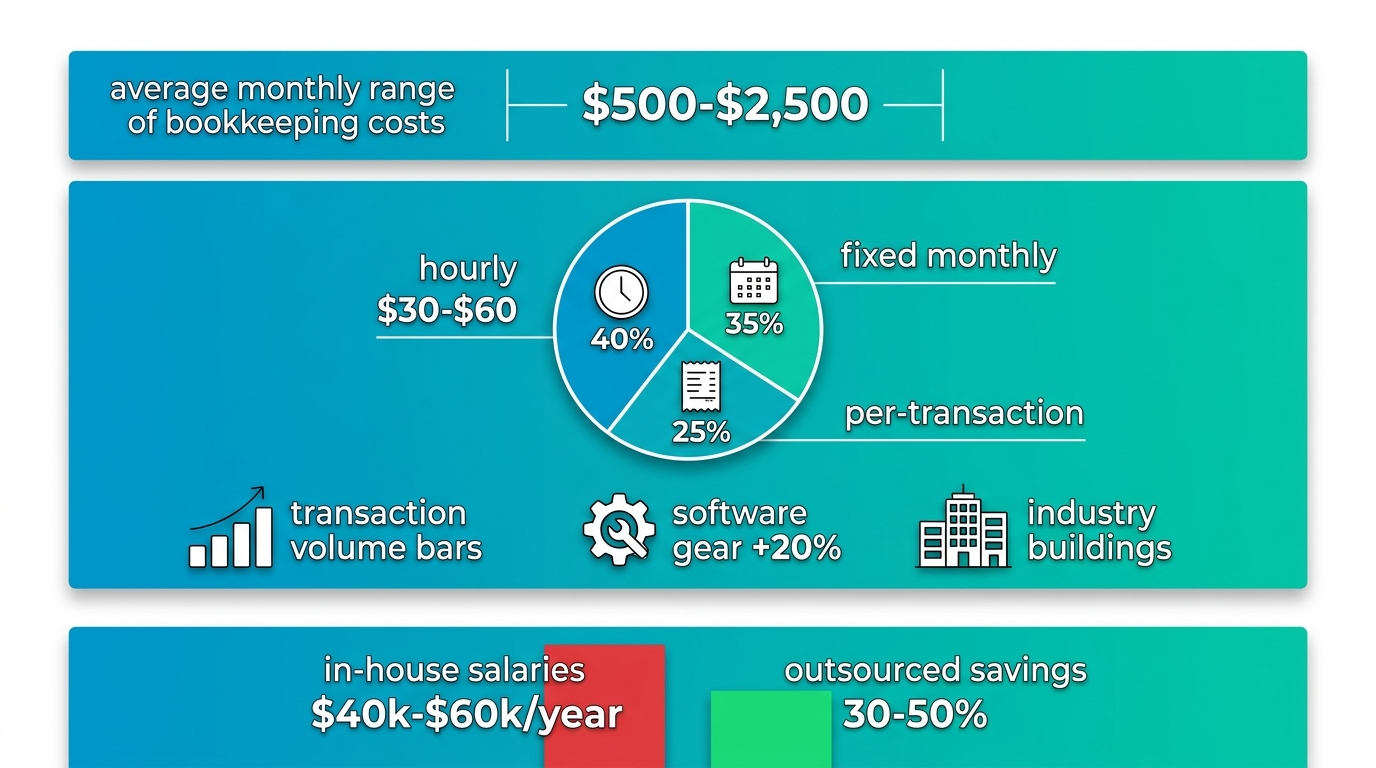
Bookkeeping costs breakdown: pricing models, in-house vs outsourcing savings
This breakdown equips you to compare options wisely. With costs understood, evaluate providers in Section 3.
3. Embrace Outsourcing Benefits
While challenges exist, the benefits far outweigh them. Outsourcing Bookkeeping transforms small business operations by delivering efficiency and growth, as highlighted in U.S. Small Business Administration (SBA) guidance on enhancing business functions through strategic partnerships.
Here are four key advantages:
- Cost Reductions: Eliminate in-house staff overheads like salaries and training, freeing capital for core growth. SBA insights affirm outsourcing cuts expenses significantly for small businesses.
- Specialized Expertise: Gain access to outsourced bookkeeping professionals with deep knowledge, ensuring accuracy beyond internal capabilities.
- Time Savings: Reclaim hours spent on administrative tasks to focus on revenue-driving activities, boosting overall productivity.
- Scalability and Compliance: Adapt effortlessly to business changes with reliable small business bookkeeping, maintaining regulatory adherence as per authoritative SBA event recommendations on financial operations.
Outsourcing bookkeeping services alongside payroll services provides operational relief. We become an extension of your team. Embrace these benefits for a competitive edge. Ready to implement? Here’s how.
4. Outsource vs In-House
Now that you understand bookkeeping essentials, let’s compare outsourcing versus in-house approaches. For small businesses, deciding between outsourced bookkeeping and in-house staff boils down to cost, control, and expertise. Bookkeeping demands careful consideration to support growth efficiently.
Outsourcing Pros
- Lower upfront costs with no salaries or benefits for full-time hires.
- Access to specialized software and tools beyond in-house budgets.
- Scalability without hiring or firing during busy seasons.
- Focus on core business by leveraging expert providers like hr payroll services for seamless integration.
On the flip side:
In-House Pros
- Full control over processes and customization.
- Immediate availability without external scheduling delays.
- Seamless integration with company culture.
Yet in-house burdens training and recruitment overhead, while outsourcing risks data privacy and communication gaps.
A small business outsourcing saves 40% on annual bookkeeping expenses compared to a full-time hire. We recommend outsourcing for those under 50 employees needing small business bookkeeping efficiency. Whichever you choose, reliable HR support elevates your decision–explore options below.
5. Integrate with Payroll
After onboarding employees, integrate payroll with your HR system to streamline payments and enhance Bookkeeping accuracy for startups. This automation syncs hours, salaries, and deductions, preventing errors in financial record-keeping.
Follow these key steps for seamless integration:
- Select compatible payroll software like QuickBooks that links with your HR platform.
- Import employee data from HR records automatically.
- Configure tax withholdings per U.S. Small Business Administration (SBA) guidelines on federal payroll taxes and new hire reporting.
- Test direct deposits for accuracy.
- Automate reporting to maintain compliant records for at least four years, as SBA authoritative U.S. government guidelines recommend.
For example, integrating QuickBooks with HR tools ensures precise payroll bookkeeping processes. Startups lacking expertise should evaluate outsourced bookkeeping through admin business services for startups, offering cost savings and compliance in small business bookkeeping.
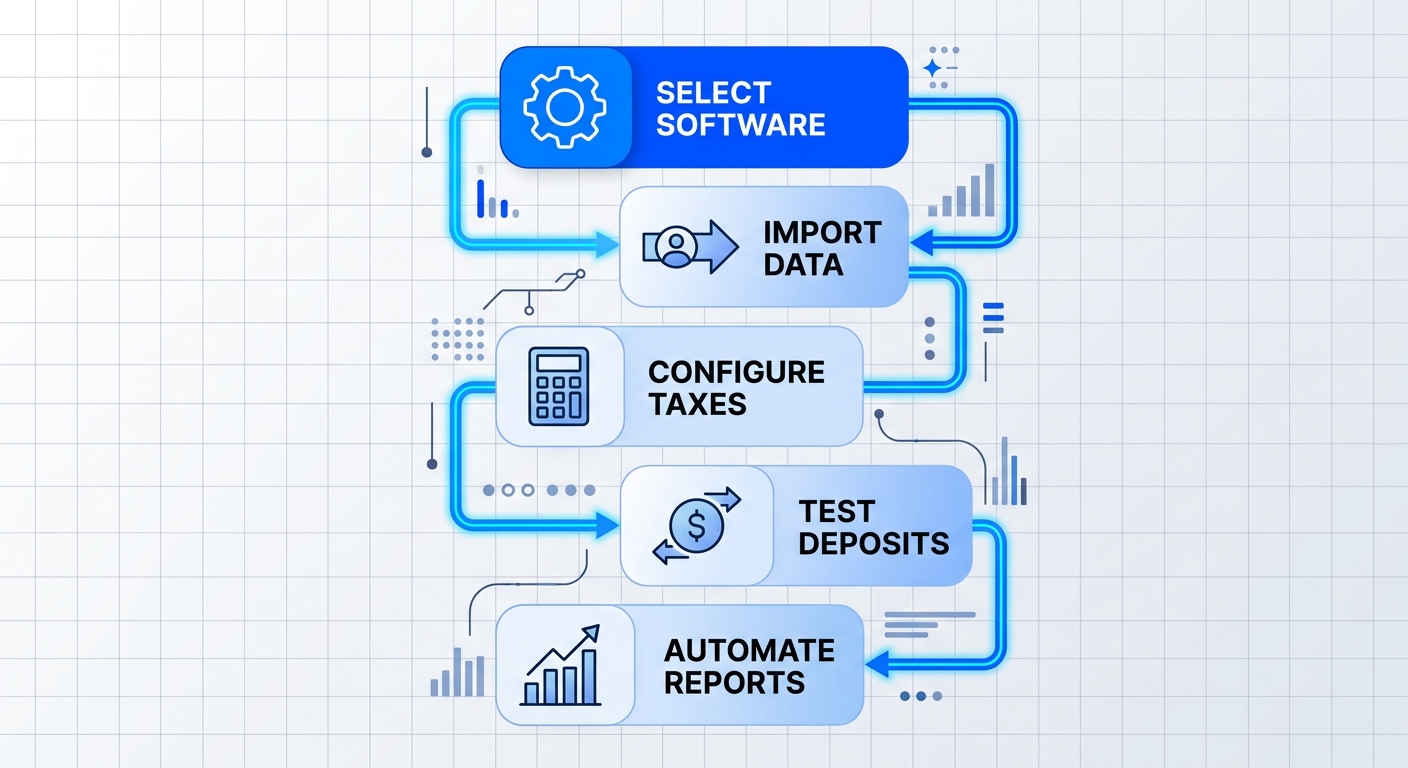
5-step payroll integration process for HR compliance
Monitor integrations monthly to catch discrepancies early. We at My HR Professionals provide dedicated support–contact us for a free consultation. This setup ensures regulatory adherence moving forward.
6. Select Top Providers
From your evaluated list, select top Bookkeeping providers using a structured scoring system. Score each on a 1-10 scale across five weighted criteria to identify outsourced options ideal for small businesses.
- Expertise in small business bookkeeping (25%): Evaluate proven experience with general ledgers, financial statements, and sales tax reporting for similar clients.
- Pricing transparency for outsourced bookkeeping (20%): Confirm clear breakdowns of fees with no hidden costs.
- Client retention rates above 90% (20%): Verify long-term satisfaction metrics.
- QuickBooks integration compatibility (20%): Check seamless software connectivity for efficient workflows.
- Response time to inquiries under 24 hours (15%): Test prompt communication standards.
Eliminate providers below 7/10 overall; shortlist the top 3. For finalists, verify credentials like Certified Public Bookkeeper (CPB) or NACPB membership. Request side-by-side quotes specifying setup fees, monthly retainers, and add-ons like payroll. Build a decision matrix table of pros and cons. Check references from two small business clients per provider. We urge you to shortlist now.
Once selected, proceed to contract negotiation.
7. Master Essential Tasks
Building on basic setup, master operations as the next phase. Bookkeeping mastery prevents common pitfalls like cash flow crises in small business bookkeeping.
Key tasks include:
- Log daily transactions accurately.
- Reconcile accounts monthly.
- Categorize expenses precisely.
- Track invoices diligently.
- Prepare tax basics quarterly.
These bookkeeping practices ensure financial clarity. Consider outsourced bookkeeping for 30-50% cost savings, expert accuracy, and more time for core HR functions. At My HR Professionals, we become an extension of your team with reliable bookkeeping services.
Follow this 5-step plan:
- Assess current processes.
- Choose tools like QuickBooks.
- Outsource if needed.
- Track KPIs.
- Review quarterly.
SBA Training Opportunity
The U.S. Small Business Administration offers authoritative government-sponsored events on business operations, including accounting basics. Register at: https://www.sba.gov/event/82859
Handling bookkeeping builds scalability. Once essentials are mastered, explore advanced growth in section 8.
8. Optimize Financial Health
Building on expense controls, optimize financial health via precise bookkeeping. Bookkeeping systematically records financial transactions, ensuring small businesses monitor their fiscal status accurately. At My HR Professionals, we integrate this essential practice to support your operations.
Small business bookkeeping delivers three key benefits:
- Enhanced cash flow visibility through monthly expense tracking.
- Simplified tax compliance with organized records.
- Informed decision-making, like identifying cost-saving opportunities.
These practices tie directly to HR by enabling precise employee benefits budgeting and regulatory adherence. For scalability, consider outsourced bookkeeping. It offers 30-50% cost savings over in-house teams, expert accuracy, and seamless integration with HR payroll systems like QuickBooks. Providers ensure flexibility as your business grows.
Implement success with these steps:
- Assess current gaps.
- Select compatible providers.
- Conduct quarterly reviews.
Expect reduced errors by up to 90% and improved profit margins by 15%. With solid bookkeeping, advance to growth strategies in section 9.
Streamline Finances with Experts
Partner with experts to overcome these business growth challenges. Small businesses often face manual Bookkeeping errors, time loss, and compliance risks that hinder progress.
Outsourced bookkeeping delivers accuracy in invoicing, payroll processing, tax compliance, and real-time insights for small business bookkeeping. It provides predictable monthly costs and support. According to the U.S. Small Business Administration, hiring full-time staff adds payroll taxes, benefits administration, and HR complexities, while outsourcing avoids these burdens as authoritative government guidance notes.
An SBA-hosted event on accounting basics reinforces efficient operations through expert support. We become an extension of your team–contact My HR Professionals today for streamlined finances. Next, explore implementation steps for seamless integration.
This article was researched and written with the assistance of AI tools.